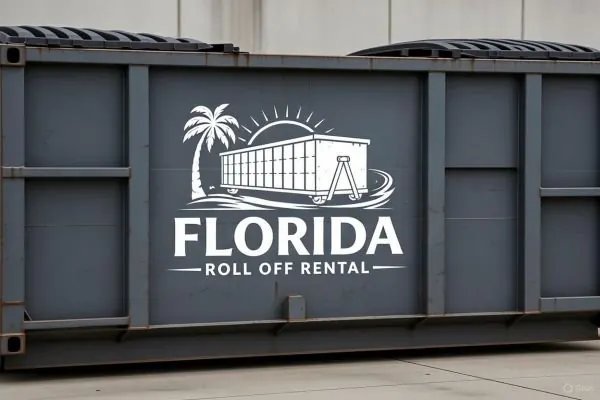
What a roll-off is
A roll-off dumpster is a rectangular, open-top steel container built to be delivered and removed by a special truck. It sits on two steel rails with small rollers at the back. The truck has a tilting bed with a cable winch. To deliver, the driver tilts the bed and lets the container roll off. To pick up, the driver hooks the cable to the front and winches it back on. The container has a swing door at the back so you can walk in or wheel debris in.
They come in a range of sizes measured in cubic yards. The common ones are 10, 20, 30 and 40 yards. Some Florida haulers also stock a 15-yard. Our size guide matches sizes to jobs.
The truck needs room
The truck is the part people forget. A roll-off truck with a container on its back is long, and it needs straight-line room to back up and set the box down, plus overhead clearance for the bed to tilt. Before delivery day, check for:
- Low tree limbs, especially live oaks over Florida driveways
- Power and cable lines
- Basketball hoops, carports and gate arches
- Parked cars, boats and trailers
- Soft ground, swales and septic tanks
If the truck cannot get in, the driver may have to leave, and you may pay for the trip.
Step 1: Book
Call (407) 250-9022. FL Roll Off Rental is a referral service: we line up an independent hauler that serves your address and pass on the job. Be ready with:
- The delivery address, and gate or access details
- What you are throwing out
- Roughly how much
- When you want it, and for how long
- Where on the property you want it
The provider confirms the size, price, included weight, rental period and delivery window directly with you.
Step 2: Prepare the spot
Clear the area. Move vehicles. If you are on pavers or a coated driveway, ask for boards under the rails. In an HOA, have your approval sorted. If the only option is the street, check whether your city needs a right-of-way permit; see our permit guide.
Step 3: Delivery
The driver backs in, sets the container, and leaves. The whole drop usually takes a few minutes. Check that the door opens where you can use it, and that the container is not blocking anything you need.
Step 4: Load it well
- Heavy first, spread evenly. Put dense material on the floor and spread it across the length.
- Break things down. Flat-pack furniture, cut long boards, and lay doors and panels flat.
- Fill gaps. Smaller debris goes into the spaces between larger pieces.
- Stay below the rail. Nothing sticking up over the top.
- Use the door. Walk heavy items in rather than lifting them over the wall, and close and latch it after.
- Cover it. In Florida's rainy season, a tarp or lid keeps water weight out and keeps light debris from blowing.
What not to put in
Every provider has its own list, set mostly by what the disposal facility accepts. The usual prohibited or surcharged items are:
- Liquid paint, solvents, stains and chemicals
- Pool chemicals, pesticides and fertilizers
- Car batteries, lithium batteries and propane tanks
- Tires and refrigerant appliances (often accepted for a fee)
- Electronics, where your county restricts them
- Medical waste
- Anything suspected to contain asbestos
Ask before you load anything you are unsure about. The FAQ has more detail.
Step 5: Pickup
When the container is full or your rental period is up, call for pickup. Make sure the truck can get back in, since cars and new debris piles have a way of appearing in front of the container over a week. The driver will check that the load is below the rail and nothing banned is visible, then winch it up and go.
Step 6: The final bill
The provider weighs the load at the disposal site. If it is within the included weight and you kept the container for the agreed time, the final bill should match the quote. If not, expect overweight charges per ton, extra-day charges, and fees for any surcharged items. For typical ranges, see our pricing page.
Florida-specific tips
- Mind the heat. Steel containers get very hot in summer sun. Load early in the day and wear gloves.
- Watch for wildlife. Snakes, rats and raccoons like debris piles. Do not leave food waste in the container.
- Plan around storms. If a storm is forecast, ask the provider whether to remove the container early, and do not leave light debris loose.
- Keep yard waste separate. Florida keeps yard trash out of lined landfills, so mixed loads with green waste can cost more.
- Check your HOA. Many Florida communities limit how long a container can stay.
Lids, doors and covers
Most roll-offs are open-top. Some Florida providers stock containers with lids or tarp systems, which help in the rainy season and in neighborhoods where people add their own trash. Ask when you book if that matters to you.
Sharing a container with a neighbor
Neighbors sometimes split a container for a joint clean-out. That can work, but agree in advance who pays for what, especially overweight charges, and remember that only one person is the provider's customer. Keep heavy debris and banned items out, since the bill goes to whoever booked it.
Common mistakes
- Booking too small and paying for a second haul
- Mixing heavy concrete into a large container of light debris
- Letting neighbors or passers-by fill your container
- Leaving it out longer than the rental period
- Putting it on a swale or lawn that cannot take the weight
Get those right and a roll-off is the simplest, cheapest way to clear a lot of debris at once.