Two ways storm debris leaves your property
After a hurricane or tropical storm, debris leaves Florida homes in two main ways.
County or city curbside collection. After a declared disaster, local governments usually hire debris contractors to collect storm debris from the public right-of-way, often with reimbursement from FEMA. It is free to residents, but it follows the county's schedule and rules, and in a big storm it can take weeks to reach your street.
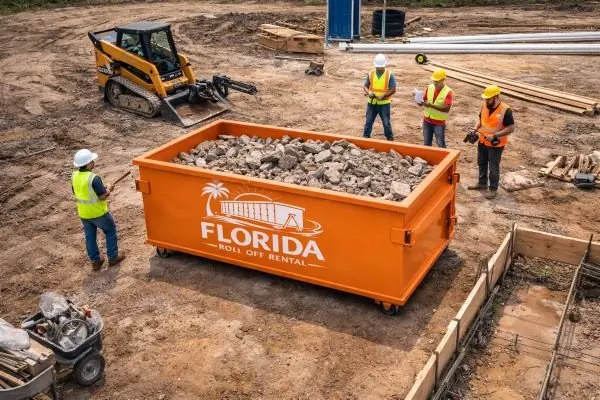
A private dumpster. You rent a roll-off, load it on your own schedule, and the provider hauls it away. It costs money, but you control the timing, and it can take things the curbside program may not.
Most households hit hard by a storm use both.
How curbside collection usually works
Each county and city sets its own rules, but the pattern across Florida is similar. Residents are asked to sort debris into separate piles at the curb, typically:
- Vegetative debris: limbs, leaves, logs, palm fronds
- Construction and demolition debris: drywall, lumber, carpet, furniture, roofing, fencing
- Appliances: refrigerators, freezers, washers, dryers, water heaters
- Electronics: televisions, computers
- Household hazardous waste: paint, chemicals, batteries, propane
Piles go between the sidewalk and the curb, clear of mailboxes, hydrants, fences, poles and storm drains. Mixed piles may not be picked up. Collection usually comes in passes, and each pass may take only one type. Check your county's emergency management or solid waste page for the exact rules after each storm.
When a private dumpster makes sense
- Speed. Wet drywall and carpet start to grow mold quickly in Florida heat. If you are gutting a flooded home, waiting weeks for curbside pickup is not practical.
- Volume. Some programs limit how much they take per pass, or how much goes in one pile.
- Space. A curb pile can block your driveway, your view of traffic or a neighbor's access. A dumpster keeps the debris on your property.
- Contractor work. Roofers and remodelers working on storm repairs usually need a container on site, regardless of curbside programs.
- Gated communities and private roads. Some county programs do not service private roads or gated communities without specific arrangements. Your association should know.
- After the program ends. Curbside storm collection runs for a set period. Repairs that happen months later need a private container.
Flood gut-outs
Flooding from surge or rain is the most urgent cleanup. The usual sequence:
- Document. Photograph every room and damaged item before anything goes out. Your insurer will likely ask for it.
- Remove wet materials. Carpet and pad, baseboards, drywall and insulation up to above the water line, and damaged cabinets and furniture.
- Dry the structure. Fans and dehumidifiers, once power is back.
- Assess. In flood zones, the local building department may review whether the home is substantially damaged under FEMA rules, which affects how it must be repaired.
A single-story home gutted to a few feet up the walls typically fills a 30-yard container. Wet material is heavy, so ask about the weight allowance. See what size dumpster you need.
Sorting your own dumpster
Even in a private dumpster, sorting helps:
- Keep vegetative debris out if you can put it at the curb for the county instead. A clean green load is cheaper anyway; see yard waste dumpster rental.
- Separate concrete and block. Storm-damaged pool decks, walls and seawalls are heavy; book a small heavy-debris container.
- Never include hazardous waste. Fuel, oil, pool chemicals, propane and batteries go to your county's hazardous waste program.
- Appliances with refrigerant usually cost extra or are refused. The county often collects them separately.
Placing a dumpster after a storm
- Keep it on your driveway, not the swale or street, where county crews need access to the debris piles.
- Avoid low spots that flood, and stay clear of downed lines.
- Check the ground. Saturated lawns and swales cannot take a loaded container.
- Leave room for the truck. Clear fallen limbs from the drive before delivery.
Timing and availability
In the first days after a major storm, roads may be closed, fuel scarce and haulers' own staff dealing with damage. Demand for containers is enormous. To give yourself the best chance:
- Call as soon as it is safe, and give the full address and access details.
- Be flexible on size: a 20-yard now may be better than a 30-yard next week.
- Ask about lids or tarps, since storms often bring days of rain.
- Keep the provider updated if your insurer or contractor delays the job.
Before the season starts
Hurricane season runs from June 1 to November 30. A little planning in spring helps:
- Know your county's debris rules and where they are published.
- Trim dead limbs and palm fronds before storms, not after.
- Take photos of your home and belongings for insurance.
- Know where a container could go on your property.
- Save our number: (407) 250-9022.
Insurance paperwork
Keep receipts for the dumpster, the cleanup supplies and any contractor you hire, along with photos of the damage before and after cleanup. Policies differ on what they cover, so ask your insurer what they need before you throw anything out.
Safety first
Do not start cleanup until officials say it is safe. Watch for downed power lines, gas leaks, damaged structures, snakes and wildlife in debris, and contaminated floodwater. Wear gloves, boots and eye protection. Never run a generator in a garage or near open windows.
General information only. Storm debris programs are set by each Florida county and city and can change with each event; follow your local emergency management guidance.